I. Overview and basic principles of the shunt
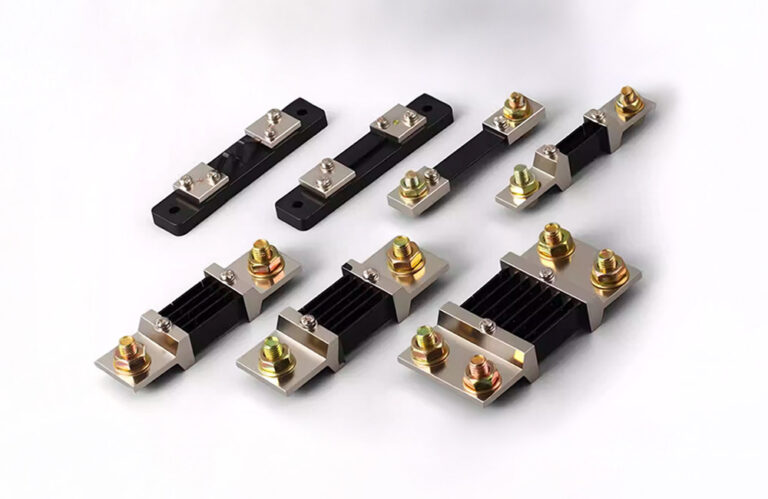
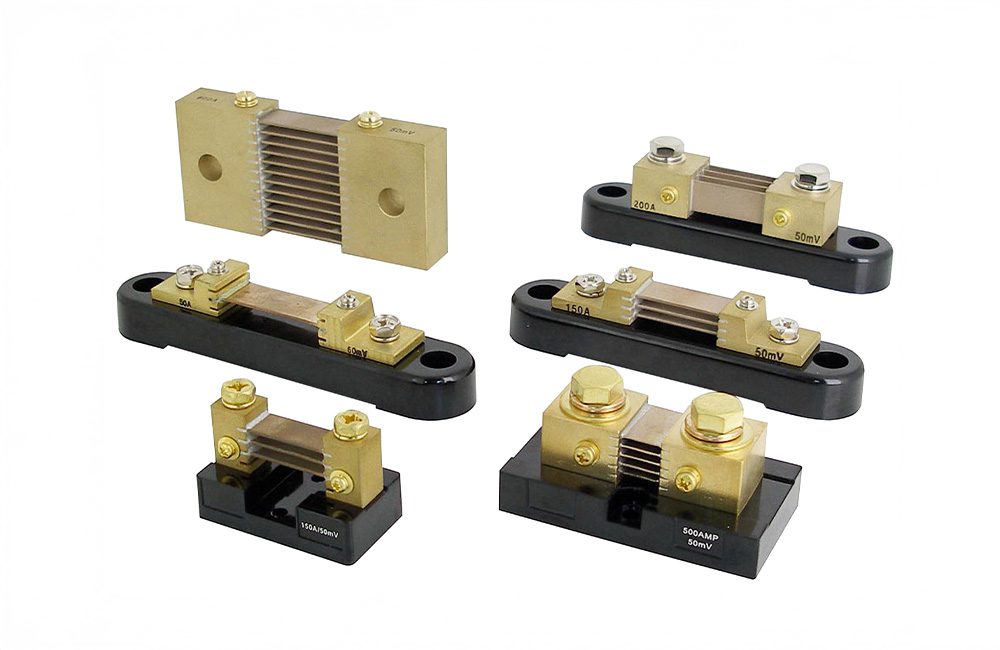
Shunt Resistor is a precision resistive element used for current measurement. Its principle of operation is based on Ohm's law: when current flows through a resistor of known resistance, a voltage drop proportional to the current is generated across the resistor. By accurately measuring this tiny voltage drop and dividing it by the resistance of the shunt, the amount of current flowing through the circuit can be calculated.
The basic formula for the shunt is:I = V / R, where I is the current to be measured in amperes, V is the voltage drop across the shunt in volts, and R is the resistance value of the shunt in ohms. For example, a shunt with a resistance value of 100 μΩ will produce a voltage drop of 50 mV across its terminals when a current of 500 A is flowing.
Second, the core technical parameters of the shunt
2.1 Rated current and rated voltage drop
The rated current is the maximum current value that the shunt can work stably for a long time, and the common specifications range from 5A to 15000A. Rated voltage drop refers to the voltage generated at both ends of the shunt under the rated current, the standard values include 45mV, 50mV, 60mV, 75mV, 100mV, 150mV, etc., of which 75mV is the most commonly used specification.
2.2 Accuracy class
The accuracy class of the shunt determines the accuracy of the measurement and common classes include:
- Class 0.1: Measurement error ≤ ±0.1% for metrology grade applications
- Grade 0.2: Measurement error ≤±0.2%, suitable for high-precision measurement
- Level 0.5: Measurement error ≤ ± 0.5%, applicable to general industrial measurement
- Level 1.0: Measurement error ≤±1.0%, suitable for general monitoring
2.3 Temperature Coefficient (TCR)
High-quality shunts usually have a TCR of less than 50 ppm/°C, with top-quality products reaching less than 5 ppm/°C. The lower the TCR, the more stable the shunt's measurement accuracy will be in different temperature environments.
2.4 Power Coefficient (PCR)
The power coefficient indicates the degree to which the resistance value varies with its own heating power, in ppm/W. Shunts generate heat when passing high currents, leading to an increase in temperature, which in turn affects the resistance value. The PCR design of high quality shunts can effectively control this effect.
Third, the materials and processes of the shunt
3.1 Resistance Alloy Materials
The resistor material of the shunt directly determines its performance and commonly used materials include:
- Manganese-copper alloys: Very low temperature coefficient (approx. 20ppm/°C) and good stability, the most commonly used material for shunts.
- Conoco alloy: Temperature coefficient of about 40ppm/°C, low cost, suitable for general applications
- Nickel-chromium alloy: High temperature resistance, suitable for high temperature environments
- Karma Alloy: ultra-low temperature coefficient (<5ppm>
3.2 Terminal materials and connection process
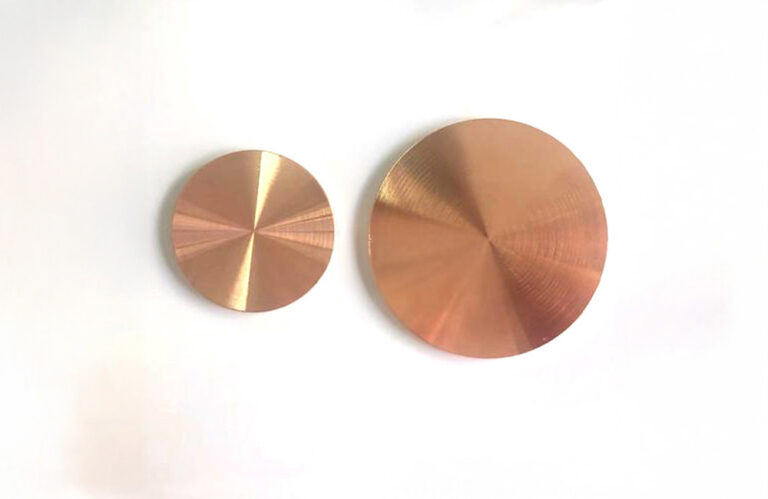
Shunt terminals are usually made of purple copper or brass with a tin or nickel plated surface to prevent oxidation. The process of connecting the resistive alloy to the terminals includes:
- Electron Beam Welding: Highest soldering quality and lowest contact resistance for high-precision shunts
- brazing: Mature process, moderate cost, most widely used
- cladding: Suitable for high current shunts, easy to install in the field
Fourth, the diverter selection points
4.1 Determination of rated current
When selecting the shunt, the rated current should be greater than 1.2-1.5 times the maximum operating current of the system, leaving an appropriate margin. At the same time, transient overload capacity should be considered to ensure that the shunt will not be damaged when the system is abnormal.
4.2 Selection of rated voltage drop
The choice of voltage drop rating requires a balance between measurement accuracy and power loss: the higher the drop, the easier the signal is to measure, but the higher the power consumption. For power-sensitive applications such as battery management systems, 50mV or less is often chosen; for industrial measurements, 75mV or 100mV are common choices.
4.3 Consideration of the application environment
Select the appropriate temperature coefficient and protection class according to the working environment:
- Wide temperature range applications: select products with TCR ≤ 20ppm/°C
- High humidity environments: choose products with sealing protection
- Vibratory environments: Selection of mechanically strong structural designs
V. Typical application scenarios of shunts
5.1 BMS for New Energy Vehicles
The shunt in the battery management system is used to monitor the charging and discharging currents of the battery packs for SOC estimation and safety protection. Typical parameters: current range ±500A, accuracy 0.5%, TCR≤50ppm/°C.
5.2 Energy storage systems
Large-scale energy storage power stations need to accurately measure the battery charge and discharge power, the accuracy of the shunt directly affects the economic benefits of the system. Usually the required accuracy is ≤0.2%, with 24-bit ADC to realize high-resolution measurement.
5.3 Charging pile metering
The current measurement of the charging pile is directly related to the transaction accuracy, and needs to meet the requirements of the national measurement and calibration regulations. The accuracy of the shunt is usually required to be 0.2 level and have good long-term stability.
5.4 Photovoltaic inverters
MPPT control requires accurate detection of the output current of the PV array, and the shunt helps to achieve maximum power point tracking to improve the efficiency of PV power generation.
Six, shunt use precautions
- Four-terminal connectionKelvin four-terminal connections are used to separate the current terminals from the voltage measurement terminals, eliminating the effect of lead resistance on the measurement.
- Attention to thermal design: High-current shunts generate considerable heat, which requires reasonable design of the heat dissipation structure and the use of air-cooled or water-cooled methods if necessary.
- Correct mounting position: Install the shunt as close as possible to the system ground potential (low-side detection) to minimize the effect of common mode voltages on the measurement.
- Shielding and Grounding: Shield and properly ground the measurement leads to improve the signal-to-noise ratio in an EMI environment.
VII. Summary
As the core component of current measurement, the selection of shunt directly affects the measurement accuracy and reliability of the whole system. Engineers need to consider the rated parameters, accuracy requirements, environmental conditions and cost budget and other factors when selecting the most suitable products for the application needs. With the rapid development of new energy, energy storage and other industries, high-precision, low temperature drift, small volume shunt products will be more widely used.