Overview of photovoltaic power generation and MPPT technology
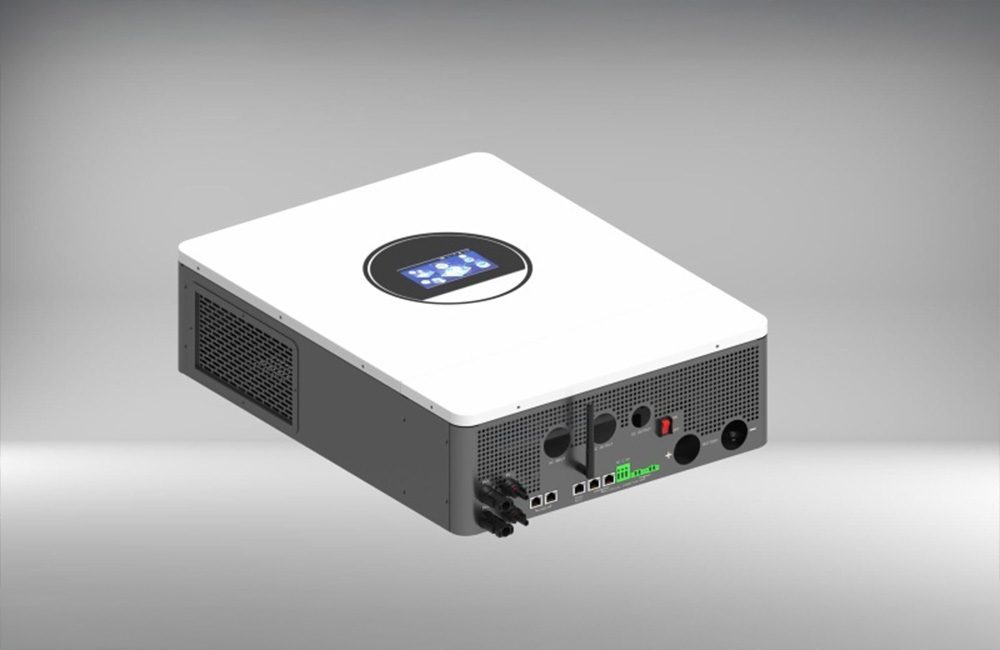
Solar photovoltaic (PV) power generation is an important way to achieve the goal of carbon neutrality. As of 2024, the cumulative global installed capacity of PV has exceeded 1,500GW, with China ranking first in the world with over 600GW of installed capacity. As the core equipment connecting PV modules to the grid, the performance of PV inverters directly affects the power generation efficiency of the whole system.
Maximum Power Point Tracking (MPPT) is one of the core functions of PV inverters. Since the output power of PV modules changes with light intensity and temperature, the MPPT controller maximizes the energy harvesting efficiency by adjusting the operating point in real time so that the system always operates in the maximum power output state.
I. MPPT control principle and current detection requirements
1.1 I-V Characteristics of PV Modules
The current-voltage (I-V) characteristic curve of a photovoltaic module is nonlinear. Under specific light and temperature conditions, there exists an operating point that maximizes the output power, called the maximum power point (MPP). As the environmental conditions change, the MPP moves.
1.2 MPPT algorithm
Commonly used MPPT algorithms include:
- Perturbation Observation (P&O):The MPP is found by making small adjustments to the operating voltage and observing the direction of power change
- Incremental conductance method (INC):Tracking based on the condition of dP/dV = 0 at the MPP
- Intelligent algorithms such as fuzzy control and neural networks:Adaptation to complex environmental conditions
Regardless of the algorithm used, accurate current and voltage measurements are required to calculate real-time power as a basis for control decisions.
1.3 Current detection accuracy requirements
The improvement of MPPT efficiency depends on accurate current detection. Studies have shown that for every 11 TP3T increase in current measurement error, the MPPT efficiency may drop by 0.31 TP3T to 0.51 TP3T, which means a considerable loss of power generation for large-scale PV power plants. Therefore, string inverters usually require current detection accuracy of ±0.5% or higher.
II. Architecture of string inverters
2.1 System components
String inverters are the mainstream products in the current market, and their basic architecture includes:
- DC input:Multiple MPPT inputs, each connected to a number of PV strings
- DC-DC boost/buck:Adjustment of DC voltage for MPPT function
- DC-AC inverter:Converting direct current to alternating current
- Filtering and Protection:Output filtering and various protection functions
2.2 Current Detection Points
In string inverters, the locations where current detection is required include:
- MPPT input current per circuit:For independent MPPT control
- DC bus current:For power calculation and protection
- AC output current:For grid-connected control and metering
III. Application of shunts in PV inverters
3.1 MPPT Input Current Detection
Each MPPT channel requires independent current detection. Considering that string inverters usually have multiple MPPT channels (e.g., 10 to 12 channels), the use of a shunt scheme has cost advantages.
Typical MPPT current range is 10A~30A. shunt selection parameters:
- Rated current: 30A~50A
- Resistance value: 1mΩ~5mΩ
- Accuracy: ±0.5% or better
- TCR: within ±50ppm/°C
3.2 DC bus current detection
DC bus currents are usually high (up to 100A or more) and Hall sensors or high current shunts can be used. When using shunts, special attention needs to be paid to the thermal design.
3.3 Trend towards miniaturization and integration
With the development of inverters in the direction of high power density, the miniaturization of current detection components is increasingly required. SMD shunts are increasingly used in PV inverters due to their small size and easy automated production.
IV. Design Points and Application Cases
4.1 Signal Conditioning Design
The millivolt signal output from the shunt needs to be amplified and filtered. Design points include:
- Selection of low-bias, low-drift operational amplifiers
- Designing the right gain to fully utilize the ADC range
- Add RC filter to suppress high frequency noise
4.2 Applications
One of the world's leading inverter manufacturers in terms of shipments has adopted Safran's SMD shunt solution for its 110kW string inverters. The solution has the following features:
- 12-channel MPPT independent detection
- Current detection accuracy ±0.3%
- Annual supply of more than 1 million products
- Exports cover more than 30 countries worldwide
V. Future development trends
5.1 Higher power density
Photovoltaic inverters are moving toward higher power densities, placing higher demands on the power density and heat dissipation performance of current sensing elements.
5.2 Intelligence and Digitalization
With the development of smart PV power plants, the current detection data will be combined with the cloud platform to realize remote monitoring and intelligent operation and maintenance.
concluding remarks
Accurate current detection is the basis for realizing efficient MPPT control. Shunts play an important role in PV inverters with their advantages of high precision and low cost. Safran has been continuously serving the PV industry for many years and has accumulated a wealth of application experience, providing customers with full support from selection to mass production.