I. Why choose manganese-copper alloy
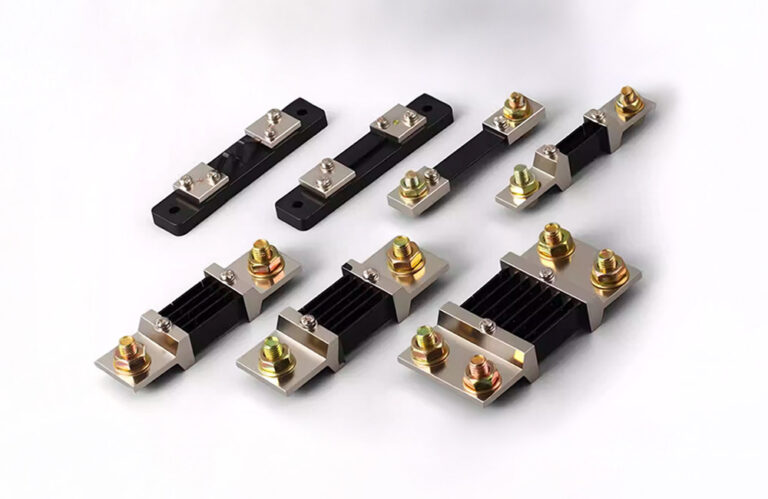
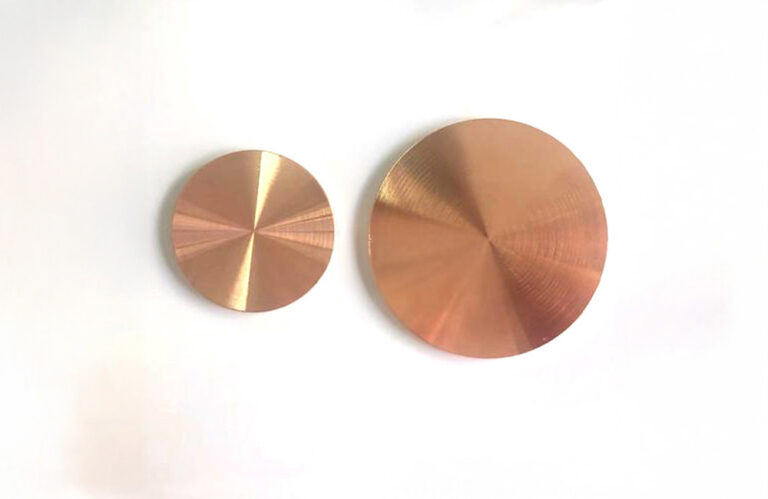
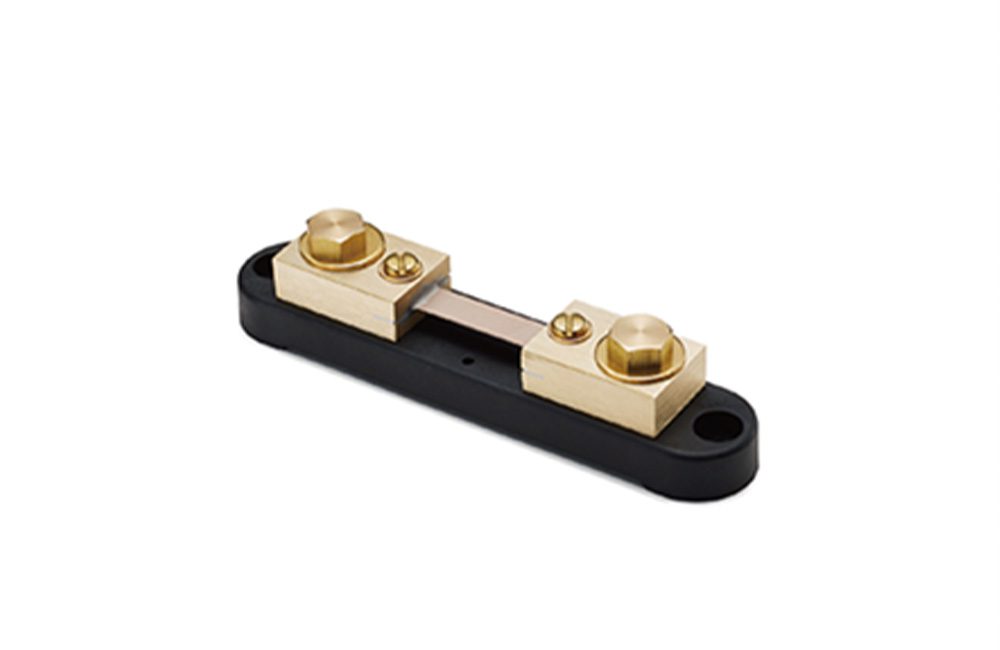
The core of the shunt is the resistive element, and the choice of its material directly determines the performance of the shunt. Among many resistance alloys, manganese-copper alloy (Manganin) has been the material of choice for precision shunts for more than 100 years due to its excellent electrical properties.
Typical compositions of manganese-copper alloys are: copper 84%, manganese 12%, nickel 4%. By precisely controlling the ratio of each element and the heat treatment process, extremely low temperature coefficients and good long-term stability can be obtained.
II. Core characteristics of manganese-copper alloys
2.1 Extremely low temperature coefficient (TCR)
The TCR of manganese copper alloys can be as low as ±10ppm/°C, with quality products reaching ±5ppm/°C or even lower. This means that when the temperature changes by 50°C, the resistance changes by only 0.05%, which is much better than other alloys such as ConocoPrime (±40ppm/°C).
2.2 Low thermal potential
The thermal potential of MnCu vs. Cu is about 1 to 2 μV/°C, which is much lower than that of CuCu (about 40 μV/°C). This results in much smaller measurement errors in temperature gradient environments.
2.3 Good long-term stability
Manganese-copper alloys with proper aging treatment can have an annual drift rate of less than 0.005%, which meets the long-term stability requirements for metrology-grade applications.
2.4 Moderate resistivity
The resistivity of manganese-copper alloy is about 43~48μΩ-cm. The moderate resistivity facilitates the processing of shunts of various specifications to meet the needs of applications ranging from small to large currents.
2.5 Excellent mechanical properties
- Tensile strength: about 400~500MPa
- Elongation: about 30~40%
- Good workability, easy to make various shapes
III. Smelting process of manganese-copper alloys
3.1 Selection of raw materials
- Electrolytic copper: purity ≥99.95%
- Electrolytic manganese: purity ≥99.9%
- Electrolytic nickel: purity ≥99.9%
- Strict control of impurities, iron, silicon and other impurities will affect the TCR
3.2 Smelting
- Adopt vacuum induction melting or argon gas protection melting
- Prevents oxidation and introduction of impurities
- Precise control of the ratio of each element
- Mix well to ensure uniformity of ingredients
3.3 Casting
- Continuous casting or mold casting
- Controlled cooling rate to reduce segregation
- Ingots are subjected to homogenizing annealing
3.4 Process molding
- Hot/cold rolled to strip or plate
- Drawing into wire or bar
- Multi-pass processing with intermediate annealing
Fourth, the shunt manufacturing process
4.1 Resistive element processing
Manganese-copper alloys are processed into appropriate shapes according to product specifications:
- Strip type: for small current shunts
- Bar type: for medium and large current shunts
- Plate type: Suitable for very high current shunts
4.2 Terminal materials
The terminals are usually made of purple copper or brass:
- Good conductivity and low contact resistance
- Coefficient of thermal expansion close to that of manganese copper
- Facilitates subsequent welding and installation
4.3 Welding process
Soldering of the resistive element to the terminals is a critical process:
Electron Beam Welding (EBW)
- Highest quality welds
- Small heat-affected zone with minimal effect on resistive elements
- Very low contact resistance
- For high end precision shunts
brazing
- Mature process, simple equipment
- Suitable for high volume production
- Need to choose the right brazing material
cladding
- Suitable for high current shunts
- Easy field replacement
- Contact resistance needs to be controlled
4.4 Resistance Adjustment
The resistance of the shunt needs to be precisely adjusted to the nominal value:
- Coarse adjustment: controlled by machining dimensions
- Fine tuning: laser or mechanical resizing
- Accuracy up to 0.01% grade
4.5 Heat treatment (ageing stabilization)
Critical stabilization treatments:
- Stress relief for machining
- Stabilized resistance value
- Improved TCR characteristics
- Typical process: 150-200°C, hours to tens of hours
4.6 Surface treatment
- Terminals are tin or nickel plated to prevent oxidation
- Resistive elements can be coated with a protective layer
- Integral sealable
4.7 Detection and sorting
Rigorous testing before leaving the factory:
- Resistance measurement (0.01% accuracy)
- TCR measurement (multiple temperature points)
- Thermopotential Measurement
- Exterior Inspection
- Selection by precision grade
V. Process factors affecting the performance of the shunt
5.1 Material composition
Small variations in manganese content can significantly affect the TCR. Typical manganese content of 12% has the lowest TCR, and deviations from this value increase the TCR.
5.2 Machining deformation
Cold working introduces internal stresses that affect resistance stability and TCR. annealing is required to remove the stresses.
5.3 Heat treatment processes
Aging temperature and time affect the final properties. Too high a temperature may alter the alloy's organization, while too low a temperature may not stabilize it sufficiently.
5.4 Welding quality
The thermal influence of the weld zone changes the local material properties and requires control of the welding parameters to minimize the influence zone.
VI. Advanced technological developments
6.1 Development of new alloys
Research on new alloy formulations with lower TCR and higher stability, such as the addition of trace rare earth elements.
6.2 Thin Film Shunts
Fabrication of miniature shunts using thin film deposition technology for integrated circuits and portable devices.
6.3 Composite structures
Composite manganese-copper alloy with copper substrate to improve heat dissipation for high current applications.
6.4 Intelligent production
Introduced automated inspection and AI quality control to improve production efficiency and consistency.
VII. Suggestions for purchase
- Choose a regular manufacturer: Materials and processes are core competencies
- Focus on Technical Indicators: TCR, accuracy, long-term stability
- Ask for a test report: Confirmation of actual performance
- Consider the application environment: Temperature range, vibration, humidity, etc.
- Evaluating value for money: Selection of accuracy level on demand
VIII. Summary
Manganese-copper alloys are the material of choice for precision shunts due to their excellent temperature stability and long-term reliability. From raw material selection, smelting and casting, processing and molding to final heat treatment and testing, each process link will affect the performance of the final product. Understanding these material properties and manufacturing processes helps engineers better select and apply shunts to meet the growing demand for high-precision current measurement in new energy, energy storage, metering and other fields.