I. Importance of charging post metering
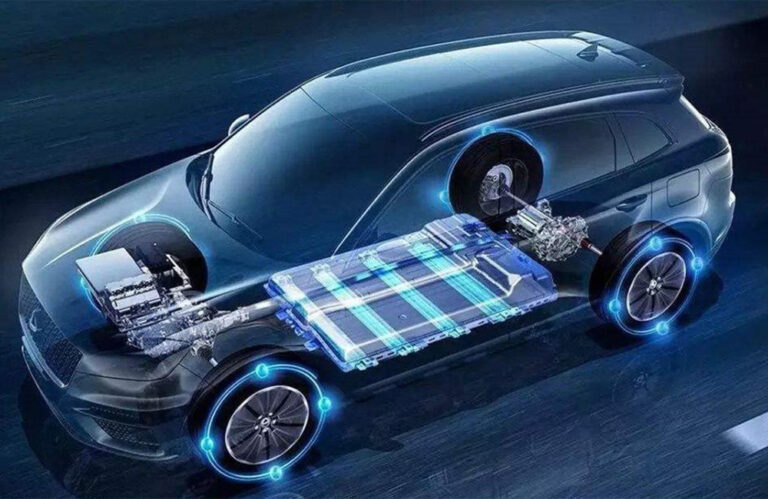
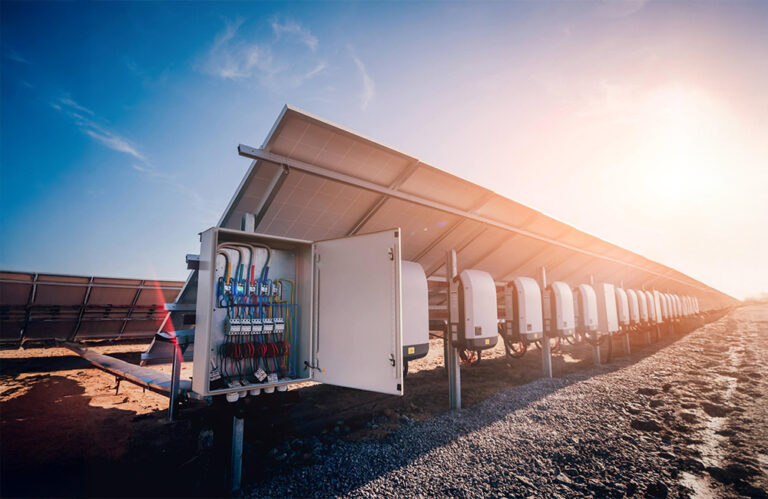
With the rapid growth of new energy vehicle ownership, the construction of public charging infrastructure is also accelerating. By the end of 2024, the number of charging piles in China has exceeded 10 million. As a kind of ”measuring instrument”, the accuracy of charging piles' power measurement is directly related to consumers' rights and interests and operators' revenue.
Charging pile current measurement is the core link of electric energy metering, and its accuracy requirement is much higher than that of ordinary electrical equipment. The state has strict regulatory requirements for the metering performance of charging pile, and the selection and application of shunt as the main current detection element of DC charging pile is crucial.
II. Interpretation of relevant national standards
2.1 JJG 1148-2018 "Electric Vehicle AC Charging Pile Inspection Specification
Key Requirements:
- Electricity metering accuracy class: Class 2.0
- Current measurement error: ≤±2.0%
- Power factor range: 0.5L~1.0~0.8C
2.2 JJG 1149-2018 "Electric Vehicle Non-vehicle-mounted Charging Machine Inspection Regulations
DC charger (charging post) metering requirements:
- Electricity metering accuracy: Class 1.0
- Current measurement error: ≤±0.5% (10%~100% rated current range)
- Voltage measurement error: ≤±0.5%
- Maximum allowable display value error: ±1.0%
2.3 GB/T 29316-2012 Technical Requirements for Power Quality of Electric Vehicle Charging and Switching Facilities
Requirements for power quality indicators such as harmonics and power factor of charging facilities indirectly affect the choice of current measurement scheme.
Third, DC charging pile current measurement program
3.1 Shunt program
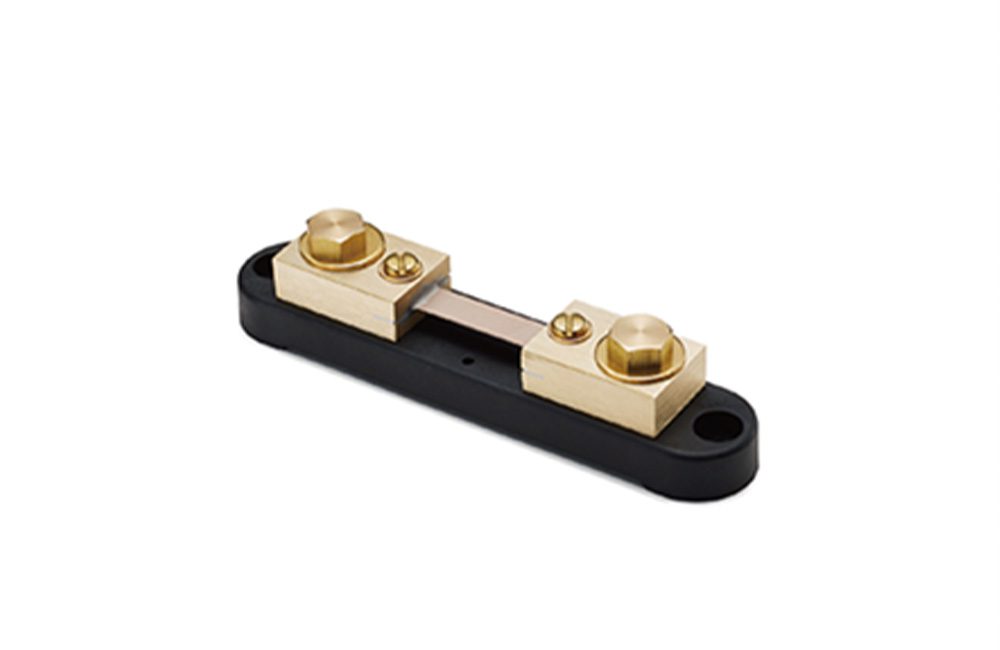
The shunt is currently the most mainstream current measurement solution for DC charging piles:
Advantage:
- High accuracy: up to 0.2% level, meet the requirements of 1.0 level measurement
- Good linearity: small linearity error over the full range
- Long-term stability: no zero drift problems
- Cost-controlled: more economical than Hall sensors
Typical parameters:
- Current specification: 250A, 500A, 750A (corresponding to 60kW, 120kW, 180kW charging pile)
- Rated voltage drop: 50mV or 75mV
- Accuracy class: 0.2% or 0.5%
- TCR: ≤50ppm/°C
3.2 Hall sensor program
Some charging piles use closed-loop Hall sensors, which have the advantage of natural isolation, but are more expensive and suffer from zero drift.
3.3 Comparison of Programs
| comparison term | splitter | Hall Sensors |
|---|---|---|
| accurate | 0.2%~0.5% | 0.5%~1.0% |
| (manufacturing, production etc) costs | 低 | 高 |
| incommunicado | Requires additional isolation | natural isolation |
| Zero Stability | talented | general |
| temperature stability | 好 | general |
| degree of mainstreaming | Mainstream Programs | Supplementary Programs |
Fourth, the diverter selection points
4.1 Current Specification Matching
Select according to the charging pile power level:
- 60kW charging post (750V/80A or 500V/120A): 150A or 200A shunt is used.
- 120kW charging post (750V/160A or 500V/240A): 250A or 300A shunt is used.
- 180kW and above: Select 400A or 500A shunt
- Reserve 20% margin for peak currents
4.2 Accuracy classes
According to JJG 1149 requirements, the current measurement error ≤ ± 0.5%, it is recommended to use 0.2% level shunt, leaving a margin for other sources of error in the system.
4.3 Temperature coefficient
Charging pile working environment temperature range is wide (-20℃ to +55℃), TCR should be ≤50ppm/℃, recommended ≤30ppm/℃.
4.4 Long-term stability
Measuring instruments require regular calibration, and the annual drift of the shunt should be<0.05% to ensure stable accuracy during the calibration cycle.
4.5 Overload capacity
The charging pile may experience short-term overcurrent, and the shunt should be able to withstand 1.2 times the rated current for continuous operation and 2 times the rated current for short-term overload.
V. System design elements
5.1 Signal Conditioning Circuit
- Eliminates the effects of contact resistance by utilizing a four-terminal connection
- High and low voltage isolation using isolated op-amps or isolated ADCs
- ADC resolution ≥ 16-bit, 24-bit sigma-delta ADC recommended
5.2 Software algorithms
- Temperature compensation: Collect the temperature of the shunt and correct the resistance value.
- Digital filtering: removes noise and improves signal-to-noise ratio
- Range switching: automatic range switching between large and small currents (if necessary)
5.3 EMC design
- Voltage sensing lines use shielded wires
- Reasonable PCB layout, digital-die separation
- Add appropriate filtering circuitry
5.4 Reliability design
- Shunt mounted securely with good contact
- Consider thermal design to avoid overheating
- Protection class to meet outdoor requirements (e.g. IP65)
VI. Certification and calibration
6.1 Initial calibration
The charging pile needs to be tested for the first time by the metrological testing organization before leaving the factory, and the testing items include:
- Current measurement error
- Voltage measurement error
- Electrical Energy Display Error
- clock error
6.2 Periodic calibration
According to the requirements of the regulations, the DC charger calibration cycle is 2 years, need to be sent to the inspection or on-site calibration.
6.3 Calibration recommendations
- Comparative calibration using standard shunts
- Multi-point calibration (10%, 50%, 100% rated current)
- Calibration at different temperature points (if available)
VII. Market trends and outlook
7.1 High Power Charging
With the popularization of 800V high-voltage platform models, the power of superchargers is developing to 480kW or even higher, which puts higher requirements on the current specification and heat dissipation capability of the shunt.
7.2 Liquid-cooled charging
The application of liquid-cooled charging guns and liquid-cooled charging piles has changed the thermal management of charging piles, and the selection and installation of shunts need to be adjusted accordingly.
7.3 Intelligent
The interaction between the charging pile and the vehicle and the power grid is more intelligent, and the real-time and precision requirements for current measurement continue to improve.
VIII. Summary
As a measuring instrument, the current measurement accuracy of charging pile is subject to strict regulations. With its high precision, low cost and long-term stability, the shunt has become the mainstream solution for DC charging pile current detection. In practical application, it is necessary to select a comprehensive model according to the charging pile power level, working environment, metering requirements and other factors, and pay attention to the signal conditioning, EMC protection, heat dissipation and other details in the system design, to ensure that it meets the national standards and protects the rights and interests of consumers.