I. Importance of BMS current detection
Battery Management System (BMS) is the core safety component of new energy vehicles, and current detection is one of the most critical functions of BMS. Accurate current measurement directly affects:
- SOC estimation accuracy: The current integral is the basis for SOC calculations, and current measurement errors can accumulate to cause SOC deviations
- SOH assessment: Analyzing Battery Health by Charging and Discharging Current Characteristics
- security protection: Overcurrent protection, short-circuit protection rely on real-time current monitoring
- equalization control: Active equalization requires precise current feedback
According to GB/T 38661-2020 "Battery Management System Technical Conditions for Electric Vehicles", BMS current measurement accuracy is required to be no more than ±1%FS, and some OEMs require ±0.5%FS or even higher.
Second, the shunt current detection program
2.1 Principle of operation
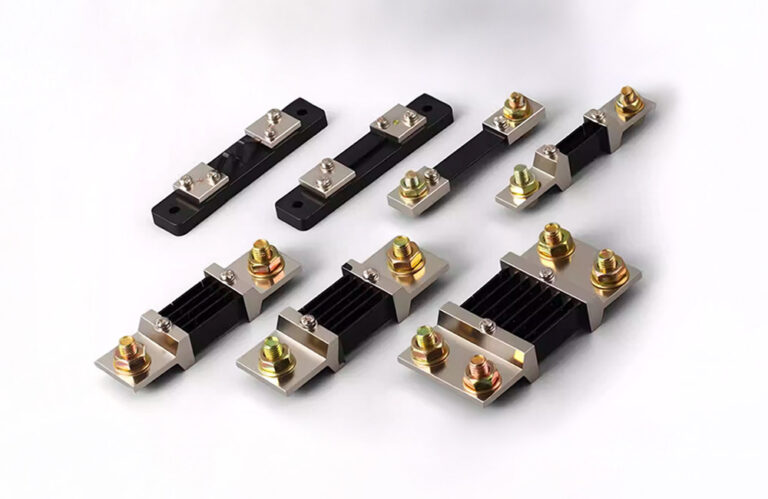
The shunt is a precision low resistance resistor connected in series in the main circuit of the battery. When current flows, according to Ohm's law V=IR, a voltage drop proportional to the current is generated across the shunt. By measuring this tiny voltage with a high precision ADC, the current value can be calculated.
2.2 Advantages of the shunt program
- highly accurate: Up to 0.1% class accuracy, excellent linearity
- inexpensive: Significant cost advantage of shunts over Hall sensors
- high-bandwidth: Fast response time to detect high frequency current changes
- No zero drift: No zero-point temperature drift problem with Hall sensors
- high reliability: No power supply required, purely passive device, very low failure rate
2.3 Challenges of the shunt program
- power loss: High current generates heat and needs to be considered for heat dissipation.
- Non-isolated measurements: The shunt is directly connected to the high voltage bus and requires isolation circuitry to protect the low voltage side.
- common-mode voltage (electronics): High common-mode voltage during high-side detection, high op-amp requirements
2.4 Typical parameter selection
Typical parameter ranges for shunts in EV BMS:
- Resistance: 25μΩ - 100μΩ
- Rated current: ±500A - ±1000A
- TCR: ≤50ppm/°C
- Accuracy: 0.5% or better
III. Hall effect current sensor program
3.1 Principles of operation
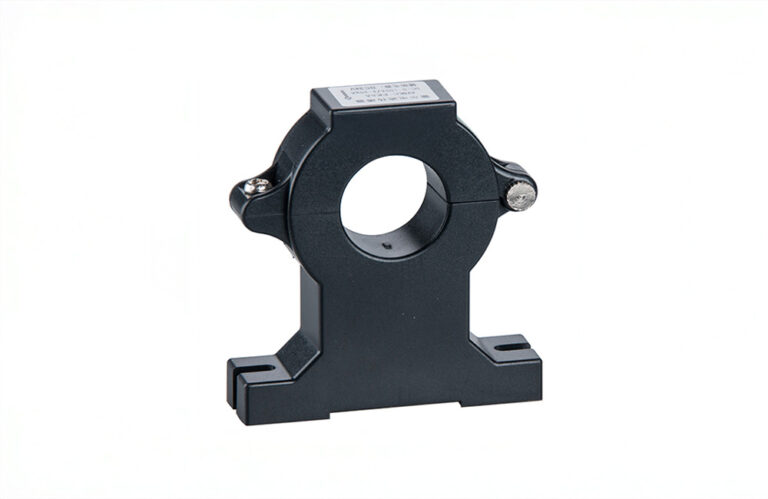
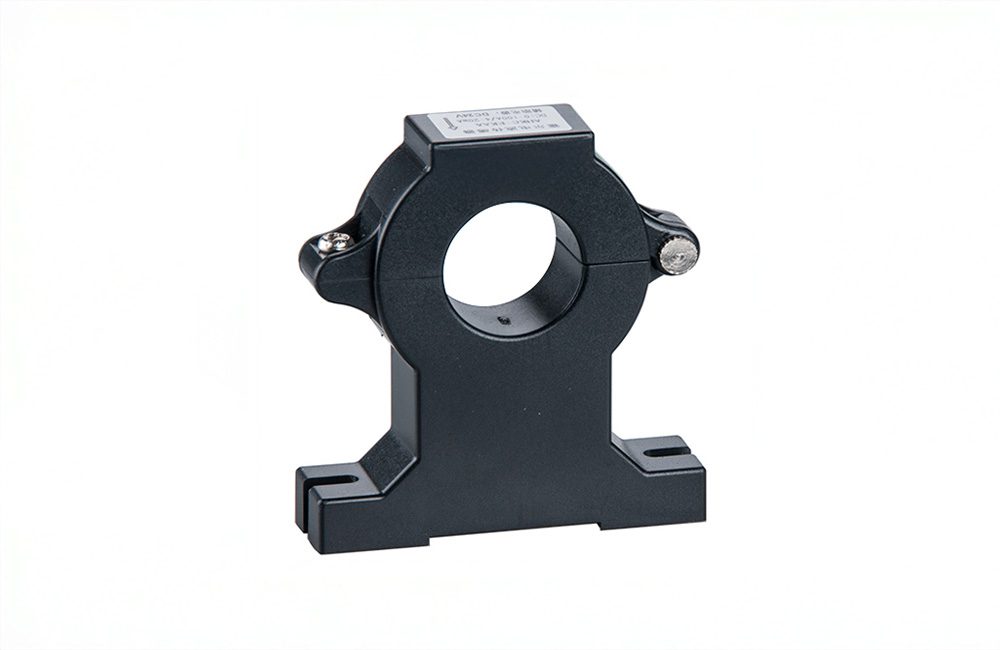
Hall sensors use the Hall effect to realize current measurement: the measured current generates a magnetic field, and the Hall element senses the change in the magnetic field and converts it into a voltage signal output. According to the mode of operation can be divided into two categories: open-loop and closed-loop.
3.2 Open-loop Hall sensors
- Simple structure and low cost
- Average accuracy, about 1-3%
- Large temperature drift, about 1%/°C
- Bandwidth is limited and usually<50kHz
3.3 Closed Loop Hall Sensors
- Adoption of magnetic balancing principle, higher precision (about 0.5%)
- Temperature drift less than open loop
- Higher bandwidth, up to 100kHz or more
- Higher costs
3.4 Hall Sensor Advantages
- natural isolation: Electrical isolation of the circuit under test from the output signal
- no power consumption: No losses in the main circuit
- Easy to install: Non-contact measurement, no need to disconnect circuits
3.5 Hall sensor deficiencies
- zero-point drift: Temperature variations can cause zero point shifts that affect small current measurements
- hysteresis: Hysteresis error exists
- susceptible to interference: External magnetic fields can affect measurement accuracy
- Higher costs: Especially high-precision closed-loop products
IV. Comprehensive comparison of the two programs
| Comparison Program | Splitter program | Hall Sensor Solutions |
|---|---|---|
| accurate | 0.1%-0.5%, excellent | 0.5%-3%, general |
| (manufacturing, production etc) costs | 低 | medium-high |
| isolation | Requires additional isolation circuitry | natural isolation |
| power wastage | 有 | None (main circuit) |
| temperature stability | 好 | general |
| zero-point drift | 无 | 有 |
| bandwidths | 高 | moderate |
| Installation complexity | need to be connected to a circuit | non-contact installation |
V. Emerging technology trends
5.1 Fluxgate sensors
Fluxgate sensors, which combine the high accuracy of shunts with the isolation characteristics of Hall sensors, are gaining increasing use in the new generation of BMS. Its accuracy is up to 0.1%, temperature drift<0.01%/°C, making it the preferred solution for high-end electric vehicles.
5.2 TMR current sensors
Tunneling Magnetoresistive (TMR) effect sensors are the latest generation of magnetic sensitive elements with the advantages of low energy consumption, low temperature drift, high sensitivity, etc., which are expected to replace the traditional Hall sensors in the future.
5.3 Integration Program
More and more chip vendors are introducing BMS front-end chips with integrated current detection, which simplify system design by integrating the shunt interface, amplifier, and ADC.
VI. Application Selection Recommendations
- Precision-critical, cost-sensitive applications: Selection of shunt solutions with high-precision isolated ADCs
- Applications with high isolation requirements and limited installation space: Selection of Closed Loop Hall Sensors
- High-end vehicles, performance-demanding applications: Consider fluxgate sensors
- Functional safety applications requiring redundant design: Dual detection with both shunt and Hall sensors possible
VII. Summary
In the field of BMS current detection for new energy vehicles, shunts and Hall sensors have their own advantages and disadvantages. With its high accuracy, low cost and no zero drift, the shunt occupies an important position in the pursuit of high-performance applications; Hall sensors are irreplaceable in some scenarios with the advantages of natural isolation and easy installation. Engineers need to choose the optimal solution based on comprehensive consideration of specific application requirements, cost budget and system architecture. As electric vehicles continue to improve their range and safety requirements, high-precision, highly reliable current detection technology will continue to evolve.