I. Overview of current monitoring in energy storage systems
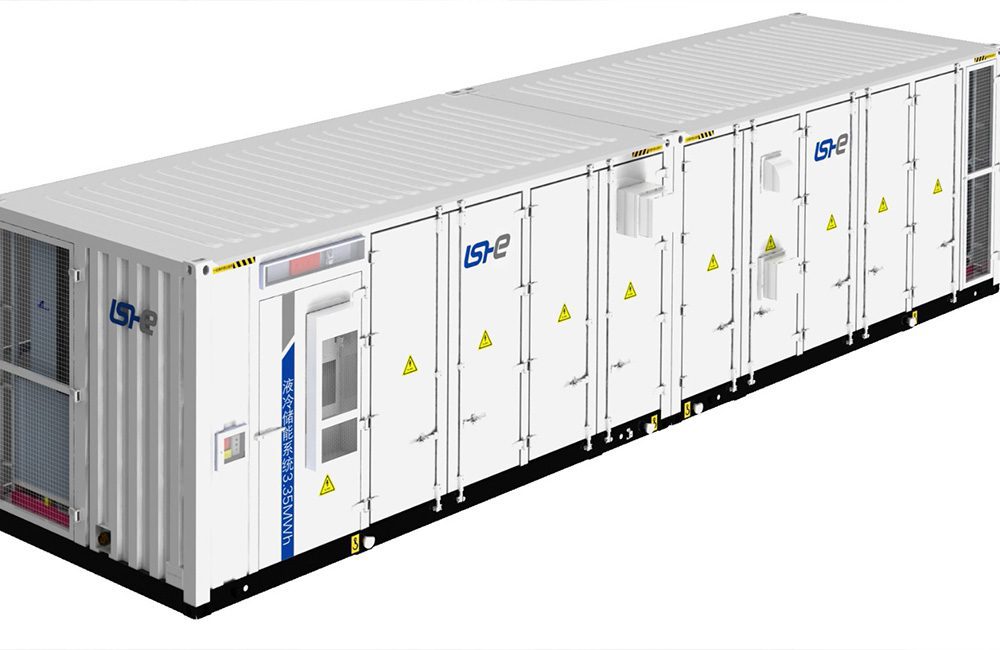
With the advancement of the ”dual carbon” goal, electrochemical energy storage has ushered in explosive growth. 2024, the cumulative installed capacity of new energy storage in China has exceeded 100GW, of which electrochemical energy storage occupies a dominant position. In the energy storage system, accurate current monitoring is the key to ensure system safety, optimize operational efficiency and extend battery life.
The current monitoring needs of the energy storage system mainly include:
- security protection: Rapid detection and response to overcurrent, short circuit and other abnormal states
- SOC calculation: Estimation of charge states based on the Coulomb counting method
- energy measurement: Accurate metering of charge/discharge power, affecting economic efficiency
- equalization control: Active equalization systems require precise current feedback
- Health Assessment: Analyzing Battery Health by Charging and Discharging Characteristics
Second, energy storage BMS architecture and current detection points
2.1 Centralized BMS Architecture
Suitable for small energy storage systems, all monitoring functions are integrated into one main control board, with the current detection point located at the positive or negative terminal of the battery pack.
2.2 Distributed BMS Architecture
Large-scale energy storage systems commonly utilize distributed architectures, including:
- Slave Board (BMU): Responsible for single-unit voltage and temperature acquisition
- Main Control Unit (BCU): Responsible for current acquisition, SOC calculation, communication management
- System Controller: Responsible for the coordination and control of the entire energy storage system
2.3 Typical detection point design
- Total Battery Cluster Current: Shunt at positive or negative terminal of each cell cluster
- PCS AC and DC side: DC-side and AC-side current monitoring of energy storage converters
- Parallel branch current: Need to monitor branch current distribution when connecting multiple clusters in parallel
Third, the diverter selection points
3.1 Current specifications
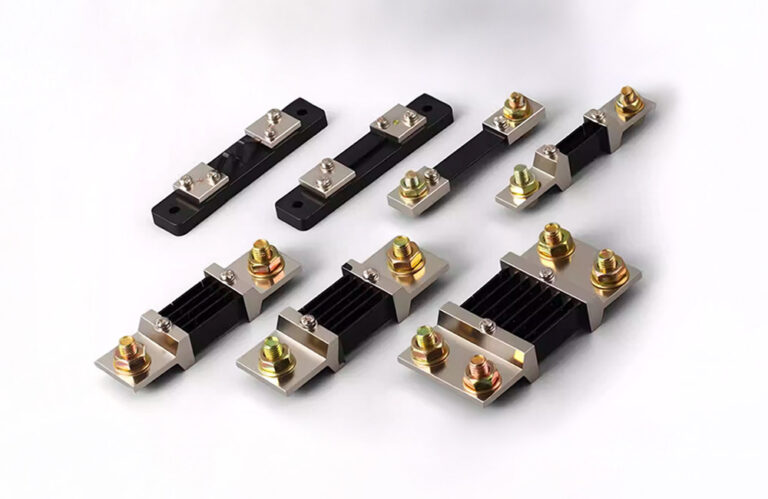
Energy storage systems have a wide range of operating currents and need to be selected in accordance with the capacity of the system with appropriate specifications:
- Household energy storage (5-20kWh): 50-100A shunt
- Commercial and industrial energy storage (100-500kWh): 200-500A shunt
- Large energy storage plants: 500-2000A shunt or multiple parallel connections
3.2 Precision requirements
The current detection accuracy of the energy storage system directly affects the energy metering accuracy:
- User-side energy storage: 0.5% level accuracy can meet the demand
- Power station level energy storage: 0.2% level or better accuracy recommended
- FM peaking applications: dynamic response characteristics considered, bandwidth >10kHz
3.3 Temperature coefficient
The energy storage system has a wide operating temperature range, and the temperature coefficient of shunt TCR should be ≤50ppm/°C, and ≤20ppm/°C for high-end applications.
3.4 Thermal Design
The power loss of high-current shunt can not be ignored. Taking 500A/50mV shunt as an example, the full load power loss is 25 W. It is necessary to design the heat dissipation structure reasonably and integrate with liquid cooling system if necessary.
IV. Signal Conditioning Circuit Design
4.1 Amplifier circuits
The voltage signal output from the shunt is usually only a few tens of millivolts and needs to be amplified for ADC sampling. Commonly used programs:
- instrumentation amplifierHigh common-mode rejection ratio, suitable for differential signal amplification
- Current Sense Amplifiers: Specialized chip with high integration
4.2 Isolation circuits
The high voltage of the energy storage system (typically 400-1500V) necessitates electrical isolation of the high and low voltage sides:
- isolated op amp: e.g. AMC1311, ACPL-C87, etc.
- Isolated ADC: e.g. AD7400, AMC1306, etc.
- Digital Isolator + Common ADC: High flexibility and cost control
4.3 ADC Selection
In order to realize accurate measurement with wide dynamic range, it is recommended to use 24-bit sigma-delta type ADCs, such as ADS1235, AD7177, etc. The sampling rate is selected according to the application requirements:
- SOC calculation: 10-100Hz is sufficient
- Protection function: 1kHz or more
- FM applications: 10kHz and above
V. Software Algorithms and Filtering
5.1 Digital Filtering
- Moving Average Filter: Simple and effective for smoothing
- Kalman filter: suitable for dynamic system state estimation
- low-pass filtering: Removal of high-frequency noise
5.2 Temperature compensation
Despite the low TCR of high quality shunts, software compensation is required over a wide temperature range. The resistance value is corrected in real time by taking the temperature of the shunt (NTC sensor).
5.3 Coulomb counting
The ampere-time integration in the SOC calculation requires high-precision current sampling, and the shorter the sampling period and the higher the accuracy, the smaller the SOC cumulative error.
VI. Reliability design
6.1 Redundant design
Dual sensor redundancy is recommended for critical application scenarios:
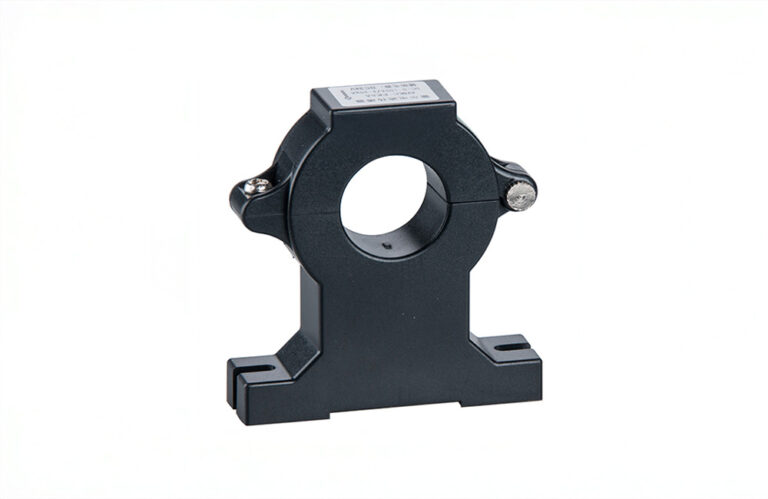
- Shunt + Hall sensor double detection
- Two independent shunt detection circuits
6.2 Troubleshooting
- Open-circuit detection: monitoring of shunt connection status
- Range calibration: detecting whether the signal is in a reasonable range or not
- Consistency check: redundant channel data comparison
6.3 EMC design
The complex electromagnetic environment of energy storage systems requires:
- Shielded twisted pair cable for signal lines
- PCB alignment with attention to digital-digital separation
- Adding filter circuits as appropriate
VII. Compliance with national standards
Energy storage BMS current detection needs to comply with relevant national standards:
- GB/T 34131-2023Technical Specification for Battery Management Systems for Electrical Energy Storage
- GB/T 43528-2023Technical Requirements for Management Communications for Electrochemical Energy Storage Batteries
- GB/T 36558-2018General Technical Conditions for Electrochemical Energy Storage Systems for Power Systems
VIII. Summary and outlook
Current monitoring of energy storage system is a core part of BMS design, which is directly related to the safety, economy and reliability of the system. With the expansion of the scale of energy storage and the improvement of accuracy requirements, high-precision shunt combined with advanced signal conditioning technology will continue to play an important role in the field of energy storage. In the future, with the development of digitalization and intelligent technology, current monitoring will be deeply combined with AI algorithms to achieve more accurate battery state estimation and predictive maintenance.