Overview and current development of energy storage systems
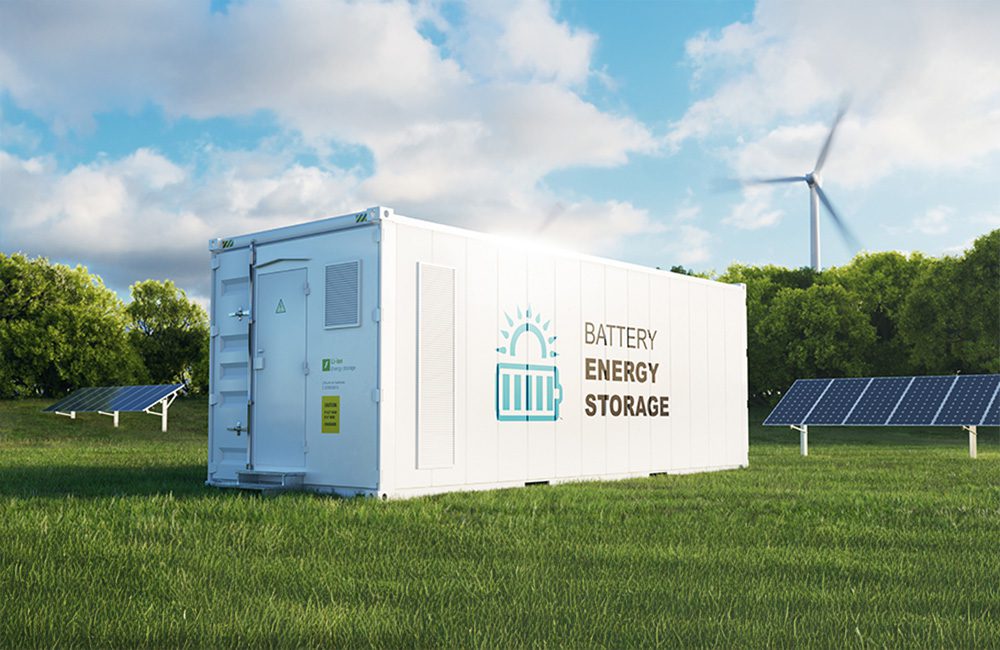
Driven by global carbon neutrality targets, large-scale energy storage systems are becoming an important part of new power systems. From peak-frequency regulation grid-level energy storage, to industrial and commercial peak shaving and valley filling energy storage, to household energy storage systems, lithium battery energy storage technology is fully penetrating into all aspects of the power system.
According to industry data, the global installed capacity of energy storage systems is expected to exceed 100 GWh in 2024 and reach more than 500 GWh by 2030. The rapid growth of this market places higher demands on the safety, reliability and economy of energy storage systems, and accurate current detection is a key foundation for realizing these goals.
I. Energy storage system architecture and current detection points
1.1 System architecture analysis
Large-scale energy storage systems are usually modular in design, consisting of multiple clusters of batteries connected in parallel. Typical system architectures include:
- Core Layers:Individual cells are connected in series to form a module
- Module Hierarchy:Multiple modules make up a battery pack.
- Battery pack hierarchy:Battery packs are connected in series to form clusters.
- System Hierarchy:Multiple battery clusters connected in parallel to a PCS (Power Storage Converter)
In this architecture, current detection is typically deployed at the following key nodes:
- Battery Cluster Current:Monitoring of charging and discharging status of each cluster for SOC calculation and equalization management
- Sink bus current:Monitoring of total system current for power control and protection
- PCS input/output current:Monitoring of converter operating status for efficiency calculations
1.2 Technical requirements for current detection
Energy storage systems have the following key requirements for current detection:
High precision:The accuracy directly affects the accuracy of SOC calculation and the fairness of metering and settlement. Grid-level energy storage systems usually require current detection accuracy of 0.2 or 0.5 grade.
Wide range:Energy storage systems have a current variation range of 1:1000 or even wider under different operating conditions such as standby, low power charging and discharging, and full power operation. The current detection scheme needs to maintain good accuracy over the full range.
High reliability:The design life of an energy storage plant is usually 15 to 20 years, and the current detection element needs to be stable and reliable in long-term operation.
II. Application of shunt in energy storage BMS
2.1 Selection Considerations for Shunts
The following factors need to be considered when selecting a shunt in an energy storage system:
Resistance value selection:The choice of shunt resistance value needs to balance the measurement accuracy and power consumption. Too large a resistor value will result in increased power consumption and excessive voltage drop; too small a resistor value will make the output signal too weak and affect the measurement accuracy. For energy storage systems, typical shunt resistance values are in the range of 50μΩ~200μΩ.
Rated current:The rated current of the shunt should leave enough margin, usually selected as 1.2~1.5 times of the maximum system operating current to cope with transient overload and abnormal working conditions.
Temperature Characterization:The operating temperature range of the energy storage system is usually -20℃~+55℃. The shunt should choose low temperature drift material (such as high precision manganese-copper alloy), and the TCR should be controlled within ±20ppm/℃.
2.2 Four-terminal structures and Kelvin connections
The high-precision shunt is a four-terminal (Kelvin) design. Two current terminals are used to access the high current loop and two voltage terminals are used to sample the voltage signal. This design separates the current path from the voltage measurement path, eliminating the effects of contact and lead resistance on measurement accuracy.
In practice, the voltage sampling line should be as close as possible to the voltage terminals of the shunt, and twisted pair wiring should be used to suppress electromagnetic interference. The sampling circuit should have high input impedance to avoid loading effect on the shunt.
2.3 Thermal Design
High-current shunts generate significant heat during operation. Taking 100μΩ, 500A shunt as an example, the rated power consumption is 25 W. If the heat is not dissipated in time, it will lead to the temperature rise of the shunt, affecting the measurement accuracy and even damaging the device.
Effective thermal design includes:
- Select a high power shunt:Allow sufficient power margin
- Copper rows for heat dissipation:Heat transfer through large cross-sectional copper rows
- Forced air cooling:Add fans to assist cooling if necessary
- Temperature compensation:Shunt temperature monitoring via NTC for software compensation
Third, high-voltage isolation and signal conditioning
3.1 Segregation requirements
The DC bus voltage of the energy storage system is usually in the range of 600V~1500V, which is a high-voltage system. Reliable electrical isolation must be realized between the current detection circuit and the control system to ensure personnel safety and normal operation of the equipment.
Isolation measures are usually realized with isolated ADCs or isolated amplifiers. The isolation level should meet the requirements of relevant safety standards (e.g. IEC 62109), with a typical isolation voltage of ≥3000Vrms.
3.2 Signal Conditioning Circuit
The output of the shunt is a small signal of millivolt level (typical value 50mV~150mV), which needs to be amplified and filtered to be fed to the ADC. the design points of the signal conditioning circuit include:
- Instrumentation Amplifier:Selection of high-precision, low-drift instrumentation amplifiers, CMRR ≥ 100dB
- Low-pass filtering:Suppresses high-frequency noise, with the cutoff frequency usually set to 1/10th of the sampling frequency.
- Overvoltage protection:Add protection devices such as TVS to prevent transient overvoltage from damaging the circuits
Fourth, EMC design and anti-interference measures
4.1 EMC environment for energy storage systems
The electromagnetic environment of large-scale energy storage systems is very complex. When multiple PCSs are operated in parallel, the high-frequency harmonics generated by the switching frequency (usually 8~20kHz) will be conducted to the BMS circuits through the DC bus and parasitic capacitance. In addition, transient disturbances such as lightning strikes and grid disturbances are also factors to be considered.
4.2 Anti-interference design measures
Multiple anti-interference measures are required to ensure the accuracy of current detection:
- Shielded design:Shunts and signal conditioning circuits are shielded with metal shields
- Differential transmission:Differential transmission of sampling signals using twisted shielded wires
- Grounding Design:Establish a sound grounding system to avoid ground loops
- Digital Filtering:Filtering algorithms are used in the software to suppress residual interference
V. Typical application cases
5.1 100MWh grid-scale energy storage project
A provincial power grid 100MWh energy storage power station project, using lithium iron phosphate battery technology route. The system consists of 40 battery clusters connected in parallel, each with a capacity of 2.5MWh and a rated current of 800A.
This project adopts a high-precision manganese-copper shunt in the current detection scheme, together with a 24-bit Sigma-Delta ADC, to achieve a measurement accuracy of 0.2 level. The shunt is selected as 100μΩ/1000A specification and is designed with direct heat dissipation by copper row. With this solution, the current measurement error of the system in the full temperature range is controlled within ±0.2%, which effectively supports the accurate calculation of SOC and energy metering and settlement.
5.2 Commercial and Industrial Energy Storage Systems
A 500kWh commercial and industrial energy storage system in an industrial park with liquid-cooled battery pack design. The system has a DC voltage of 750V and a rated current of 300A.
Considering the relatively small capacity of the system and the sensitive cost, the project adopts an economical shunt solution. The shunt resistance value is 150μΩ, and with the 16-bit ADC, the measurement accuracy reaches 0.5 level. Under the premise of meeting the technical requirements, the system cost is effectively controlled.
VI. Future development trends
6.1 Higher accuracy and stability
As the capacity of the energy storage system increases and the operation and management is refined, the requirements for current detection accuracy will continue to improve. The research and development of new alloy materials and the improvement of processing technology will push the accuracy of shunt to 0.1 level or even higher level.
6.2 Intelligence and Integration
Integrated shunt module (built-in ADC, temperature sensor, communication interface) will become an important trend to simplify system design and improve reliability. At the same time, AI-based self-diagnosis function will be gradually introduced to realize the health status monitoring and predictive maintenance of the shunt.
6.3 Standardized development
With the standardized development of the energy storage industry, the technical standards related to current detection will be more complete. This will promote the unification of product specifications and reduce the overall cost of the industry.
concluding remarks
The rapid development of large-scale energy storage systems has put forward higher requirements for current detection technology. With its high precision and high reliability, the shunt plays an irreplaceable role in the energy storage BMS. Through reasonable selection and design, perfect isolation measures and effective EMC protection, the shunt solution can well meet the technical requirements of energy storage systems.
Safran has been deeply engaged in the energy storage industry for a long time and has accumulated rich application experience. We can provide all-round technical support from shunt selection to system integration according to customers' specific needs.