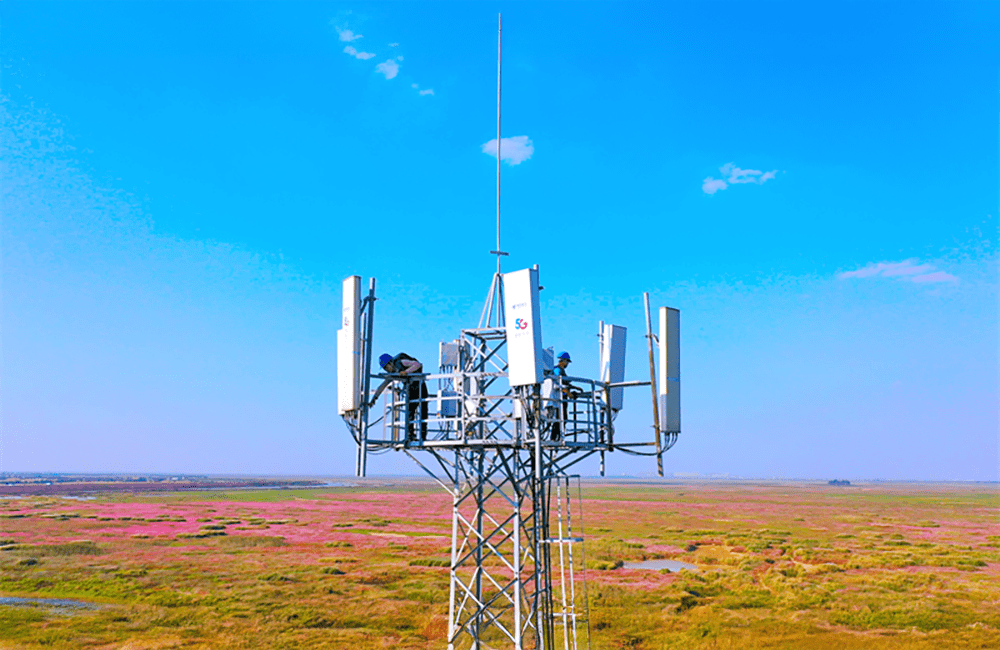
Project Background
The power consumption of 5G base stations is significantly higher than that of 4G base stations, and the power consumption of a single station can reach 3-5kW, making energy consumption an important cost for operators. A world-renowned communications equipment manufacturer is upgrading its 5G base station power supply product line, and needs a high-precision current detection solution to realize load monitoring, fault diagnosis and intelligent energy efficiency management.
System technical requirements:
- Power supply system: -48V DC (communication industry standard)
- Number of output channels: multi-output, single 50A-100A
- Total power: 5kW
- Current measurement accuracy: ±0.5%
- Working Temperature: -40℃ ~ +70℃
- Reliability: MTBF > 500,000 hours
Technical challenges faced
1. Carrier-grade reliability
Communication base stations are critical infrastructures that require 99.999% (five nines) availability, meaning that annual downtime cannot exceed five minutes. The power supply system, as the lifeline of the base station, requires even higher reliability.
2. Wide temperature range
Base stations may be installed in a variety of extreme environments, ranging from -40°C in the bitter cold of the north to +70°C in the scorching heat of the south, and beyond. Shunts need to maintain accuracy and reliability over the full temperature range.
3. Accurate energy efficiency measurement
5G base stations consume large amounts of energy, and accurate power consumption monitoring is the basis for energy efficiency management. It is necessary to accurately measure the output current of each circuit, calculate the power consumption of each subsystem, and identify the space for energy efficiency optimization.
4. Electromagnetic compatibility
The base station power supply system contains a large number of switching power modules, and high-frequency switching noise affects the accuracy of current measurement. The shunt and signal conditioning circuits require good anti-interference design.
Technical Solutions
1. Shunt configuration
Depending on the current specifications of different output circuits, the FL-2 type 75A and 100A shunts are configured with a uniform 75mV rated voltage drop:
- FL-2-1mΩ-75A: for 50-75A output circuits
- FL-2-750µΩ-100A: for 75-100A output circuits
2. Carrier-grade reliability design
- Selection of manganese-copper alloy materials with excellent long-term stability, annual drift<50ppm
- Electron beam welding process ensures reliable solder joints
- All products are screened after 168 hours of high-temperature aging, eliminating early failures.
- MTBF calculation > 1 million hours to meet carrier-grade requirements
3. Accuracy assurance measures
- Adoption of 0.5 grade precision shunt
- TCR<30ppm>
- Four-terminal wiring eliminates the effects of lead resistance
- Precision signal conditioning circuitry
4. Anti-jamming design
- Splitter mounted away from switching tubes and other high-frequency noise sources
- Voltage sampling alignment with differential distribution lines, signal ground and power ground separation
- Signal Conditioning Circuit Adds RC Low Pass Filtering
Project results
- Measurement accuracy:Current measurement accuracy of ±0.5% over the full temperature range of -40℃~+70℃.
- Reliability:Products passed telecom-grade reliability tests (high temperature, low temperature, temperature shock, vibration, salt spray, etc.)
- Application Scale:Used in over 100,000 5G base stations worldwide
- Energy efficiency management:Accurate power consumption data supports the customer's intelligent energy efficiency management system with annual power savings of 5-10% per station.
- Live performance:Field failure rate is far lower than the industry average, highly recognized by customers