Background of the development of the charging pile industry
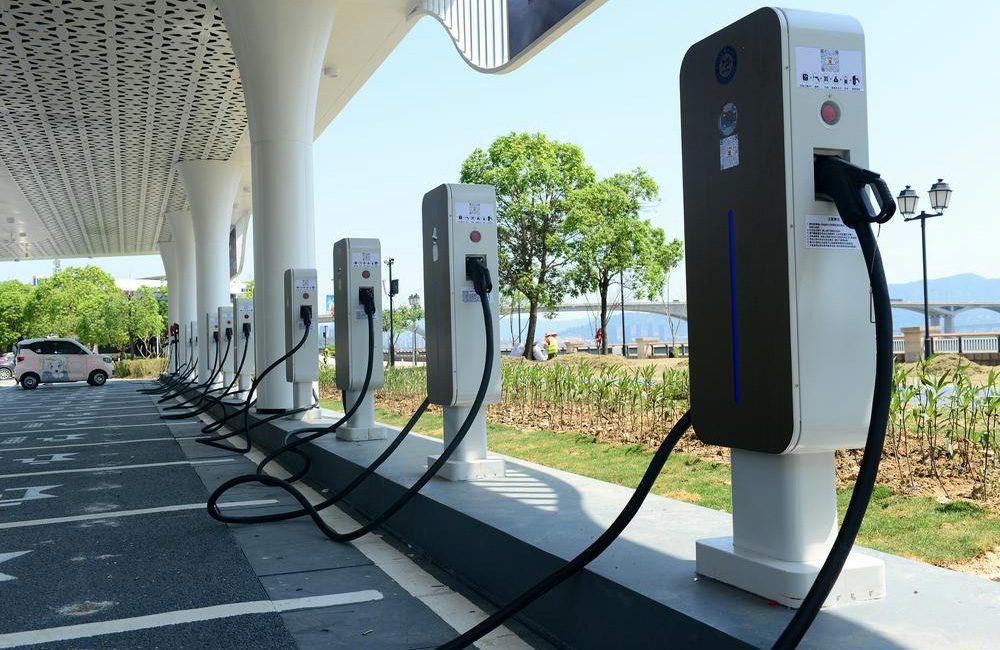
With the rapid growth of new energy vehicle ownership, charging infrastructure construction has become a key link to support industrial development. According to data from the National Energy Administration, by the end of 2024, the number of charging piles nationwide had exceeded 8 million, of which the proportion of DC fast-charging piles continued to increase. DC charging piles have become the mainstream choice for public charging scenarios due to their advantage of fast charging speed (usually up to 80% in 30 minutes).
In DC charging pile, current detection is the core link to realize accurate power metering, which is directly related to the fairness of charging fee settlement and user experience. In this paper, we will discuss the technical requirements of current detection and shunt application program in DC charging pile.
I. Working principle of DC charging pile
1.1 System components
The DC charging post is mainly composed of the following parts:
- Rectifier module:Converts three-phase alternating current to direct current
- DC-DC converter module:Adjust the output voltage to match the needs of different models
- Measurement module:Accurate metering of charging power
- Charge Controller:Communicate with the vehicle BMS to control the charging process
- Human-computer interface:Display charging information, support payment and other functions
1.2 Charging process
The DC charging process is usually divided into several stages: constant-current pre-charging, constant-current fast charging, constant-voltage charging, and trickle charging. In the constant-current fast-charging stage, the current can reach hundreds of amperes, which puts high requirements on the current detection components.
II. Technical requirements for electricity metering
2.1 Statutory and standard requirements
As trade settlement equipment, EV charging piles must comply with national metrology regulations. Key standards include:
- JJG 1148-2018 "Electric Vehicle AC Charging Pile Inspection Specification
- JJG 1149-2018 "Electric Vehicle Non-vehicle Charger Inspection Specification
- GB/T 29318-2012 Electric energy metering for non-vehicle-mounted chargers for electric vehicles
According to the above standards, the accuracy level of DC charging pile power metering should reach 1.0 level, and some high-end products can reach 0.5 level.
2.2 Environmental adaptation requirements
Charging piles are usually installed in outdoor or semi-outdoor environments and need to function properly under the following conditions:
- Working Temperature: -40℃~+70℃
- Relative humidity: ≤95%RH (no condensation)
- Anti-electromagnetic interference: meet GB/T 17626 series standards
Third, the application of the shunt in the charging pile
3.1 Points for selecting a shunt
The following factors need to be considered for the selection of shunts for DC charging piles:
Rated current:Choose according to the power level of the charging pile. Take 240kW super charging pile as an example, the maximum output current is about 600A, the shunt rated current should choose 750A or 1000A specification.
Resistance value:Typical values are in the range of 50μΩ to 200μΩ. Resistance values are selected by balancing measurement accuracy and power consumption.
Temperature coefficient:Low TCR materials (≤±50ppm/°C) should be selected to ensure measurement accuracy over a wide temperature range.
Mounting method:Bolt mounting, solder mounting or PCB mounting are available, depending on the internal structure of the charging pile.
3.2 Integrated Metering Program
In order to simplify the design of charging piles, DC energy meter products integrating shunt and metering chip have appeared on the market. Taking a brand 300A integrated DC energy meter as an example, its features include:
- Built-in high-precision shunt, no need for external current transformer
- Measurement accuracy to 1.0 grade
- Supports multiple communication protocols (Modbus-RTU, DL/T 645, etc.)
- Compact size for easy charging post integration
3.3 Installation and wiring points
The installation of the shunt in the charging pile should be noted:
- Location Options:Installation on the negative side of the charging output circuit, away from heat sources
- Contact resistance:Ensure that the copper rows are firmly connected to reduce contact resistance
- Sample line wiring:Sampling cable should be away from power cables, use twisted shielded cable
- Thermal Design:Allow enough space for heat dissipation and add heat sinks if necessary.
IV. Challenges and countermeasures of electric energy metering for charging piles
4.1 Dynamic current measurement
During the charging process, the current is not a constant value, but changes continuously with the charging state. Especially during startup, stopping and charging mode switching, the current changes more drastically. The current detection system needs to be dynamic enough to accurately capture these changes.
4.2 Harmonic effects
The harmonic current generated by the charging pile rectifier will affect the power measurement accuracy. The measurement system should have a certain harmonic analysis capability, or by means of filtering and other means to inhibit the harmonic influence.
4.3 Temperature Drift Compensation
Outdoor charging piles face a wide range of temperature variations. High-quality shunt itself has low temperature drift characteristics, and at the same time can be built-in NTC sensor to monitor the temperature of the shunt, real-time compensation in the software, to further improve the measurement accuracy.
V. Supercharging and future trends
5.1 Development of supercharging technology
In order to shorten the charging time, supercharging technology is developing rapidly. 800V high-voltage platform and liquid-cooled supercharging technology enable the charging power to exceed 480kW or even higher, and the charging current can reach over 600A. This puts higher requirements on the power capacity and heat dissipation design of the shunt.
5.2 Intelligence and Network Connectivity
Future charging piles will be more intelligent and net-connected. The metering data will be synchronized with the cloud platform in real time, supporting remote monitoring, fault diagnosis and predictive maintenance. The reliability and stability of the shunt, as a key measurement element, is critical.
concluding remarks
Power metering is one of the core functions of charging piles, and the performance of the shunt, as a key component of current detection, directly affects metering accuracy and user experience. Safran has developed a series of high-precision shunt products for charging pile applications, featuring low temperature drift, high stability, easy integration, etc., which have been applied to a number of domestic charging pile enterprises in large quantities.