Importance of current measurement techniques
Current measurement is the basis for control, protection and metering of electrical systems. With the rapid development of new energy, electric vehicles, energy storage systems and other fields, there is a growing demand for high current (tens of amperes to thousands of amperes) measurement, and at the same time, higher requirements have been put forward for measurement accuracy, dynamic response, temperature stability and other performance indicators. This paper will systematically introduce the current mainstream high current measurement technology and its characteristics.
I. Shunt technology based on Ohm's law
1.1 Principle of operation
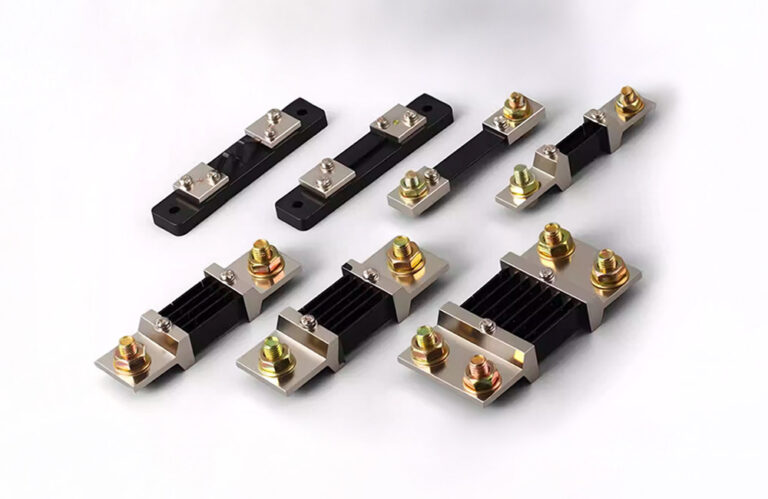
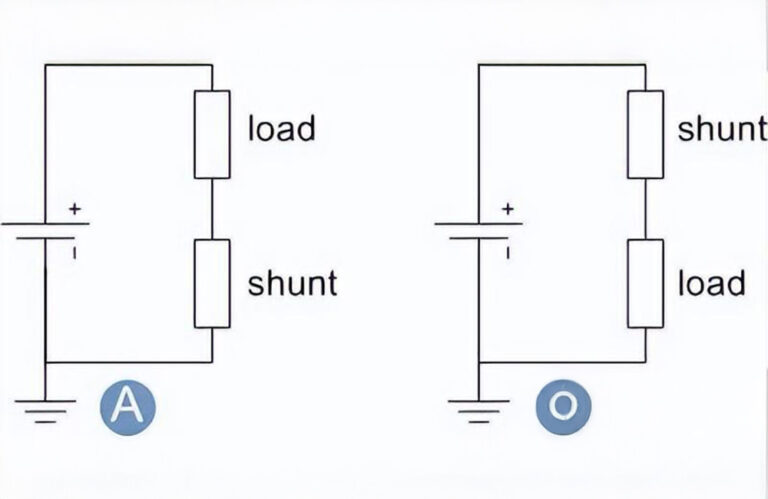
The shunt is the most classic current measuring element, the working principle is simple and direct: a precision resistor of known resistance value is connected in series in the circuit under test, and the current value is calculated by measuring the voltage drop across the resistor (U=IR).
1.2 Technical characteristics
- Pros:High accuracy, good stability, low cost, no zero drift
- Drawbacks:Insertion loss, no electrical isolation, significant heat generation under high current
- Typical Accuracy:0.1%~0.5%
- Scope of Application:DC and AC, from milliamperes to thousands of amperes
II. Hall effect based sensor technology
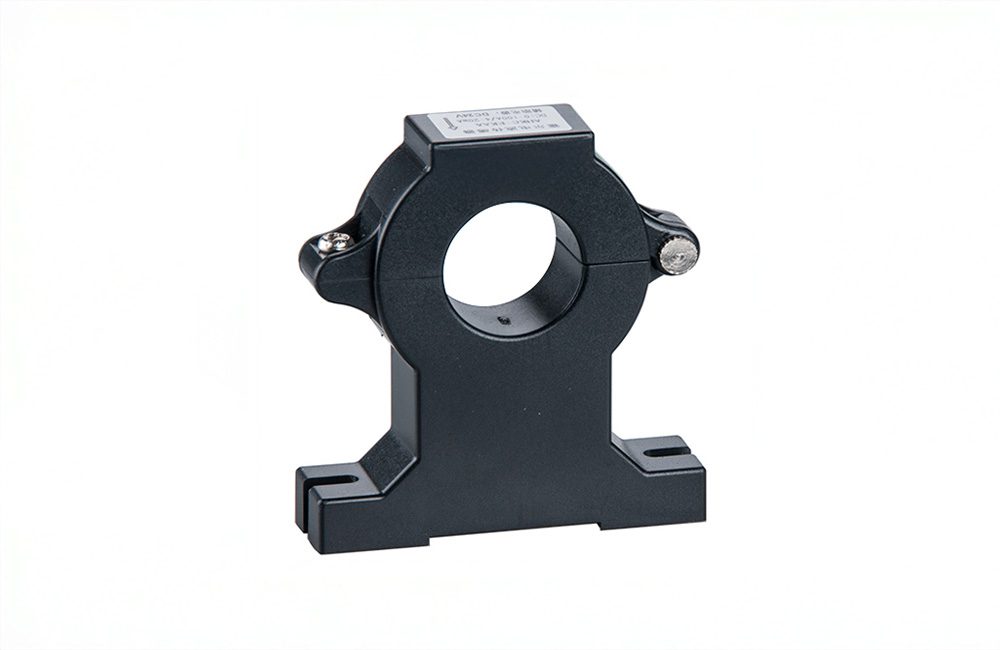
2.1 Open-loop Hall sensors
Open-loop Hall sensors are simple in construction, with the Hall element directly outputting a signal proportional to the magnetic field (current).
- Pros:Simple structure, lower cost, low power consumption
- Drawbacks:Limited accuracy, large temperature drift, average linearity
- Typical Accuracy:1%~2%
2.2 Closed Loop Hall Sensors
Closed-loop Hall sensors (magnetically balanced) maintain a zero-flux operating condition by canceling the magnetic field of the primary current with the magnetic field generated by the compensation winding.
- Pros:Higher accuracy, good linearity, wide bandwidth
- Drawbacks:Higher cost and power consumption
- Typical Accuracy:0.5%~1%
III. Fluxgate sensor technology
3.1 Principles of operation
Fluxgate sensors utilize the non-linear magnetization characteristics of easily saturated cores to achieve highly accurate measurement of the measured magnetic field (current) through the coordination of the excitation and detection windings.
3.2 Technical characteristics
- Pros:High precision, low temperature drift, good long-term stability
- Drawbacks:Complex structure, high cost, limited bandwidth
- Typical Accuracy:0.1%~0.5%
- Applications:High-end electric vehicles, precision measuring instruments
IV. New Magnetoresistive Sensor Technology
4.1 TMR (Tunneling Magnetoresistive) Sensors
TMR sensors utilize the quantum tunneling effect and have extremely high magnetic field sensitivity.
- Pros:High sensitivity, low temperature drift, very low power consumption
- Drawbacks:Limited range and high cost
- Application Prospects:Promising to replace Hall sensors in some applications
4.2 GMR (Giant Magnetoresistive) Sensors
GMR sensors fall between Hall and TMR and are competitive in some applications.
V. Technology Comparison and Selection Guide
| Type of technology | accurate | temperature stability | bandwidths | incommunicado | (manufacturing, production etc) costs |
|---|---|---|---|---|---|
| splitter | 高 | 优 | 宽 | 无 | 低 |
| Open-loop Hall | 中 | 中 | 中 | 有 | 低 |
| Closed-loop Hall | high | rather or relatively good | 宽 | 有 | mid-to-high |
| magnetic flux door | 高 | 优 | 中 | 有 | 高 |
| TMR | high | 优 | 宽 | 有 | mid-to-high |
VI. Future development trends
6.1 Hybrid sensors
Combining different technologies (e.g. Hall+Splitter) and utilizing the advantages of each to achieve better overall performance.
6.2 Integration and Intelligence
Integration of sensing elements, signal processing circuits, and digital interfaces simplifies application design.
concluding remarks
Various current measurement technologies have their own advantages and disadvantages, no one technology can occupy an absolute advantage in all applications. Engineers need to choose the most suitable technical solution according to the specific application requirements, taking into account factors such as accuracy, cost, isolation and power consumption. With its high accuracy and low cost, shunt is still the best choice in many applications.